Wisma Atria #22-04

Mon-Thu: 10AM - 6PM | Fri: 10AM - 8PM | Sat: 10AM - 3PM | Sun & PH: Closed



Noticing a drooping eyelid can be unsettling, especially when you are unsure why it’s happening or whether it might get worse. For some, it’s a gradual change that’s easy to dismiss at first. For others, it appears more suddenly and raises immediate concern. In either case, it’s natural to wonder what’s causing the change and whether it needs medical attention.
Diagnosing ptosis involves more than just identifying a low eyelid. A careful evaluation helps determine whether the droop is mild or severe, whether it’s affecting your vision, and, most importantly, what’s behind it. On this page, we explain how ptosis is assessed, what to expect during a clinical evaluation, and when further investigation may be needed.
Diagnosing ptosis begins with a detailed clinical examination to assess how the eyelid functions and whether it is obstructing your visual field. Our Consultant Plastic Surgeon, Dr. Samuel Ho, will evaluate both the appearance and movement of the eyelids, along with asking questions about when the drooping began, whether it’s getting worse, and if there are any related symptoms such as eye strain, double vision, or headaches.
The evaluation often includes measuring the height of the eyelid, testing the strength of the muscles involved in eyelid elevation, and checking for any signs of nerve or muscle involvement. In some cases, additional tests may be done to rule out underlying conditions, especially if the ptosis appeared suddenly or affects both eyes.
This step-by-step assessment helps determine whether the ptosis is mild or severe, stable or progressive, and whether further investigation or treatment is needed. An accurate diagnosis also ensures that other causes of eyelid drooping, such as excess skin, brow ptosis, or neurological disorders, are not overlooked.
A ptosis evaluation includes a combination of patient history, physical examination, and visual function assessment to determine the cause and severity of the drooping.
This step-by-step process ensures an accurate diagnosis and helps guide decisions about further testing or management.
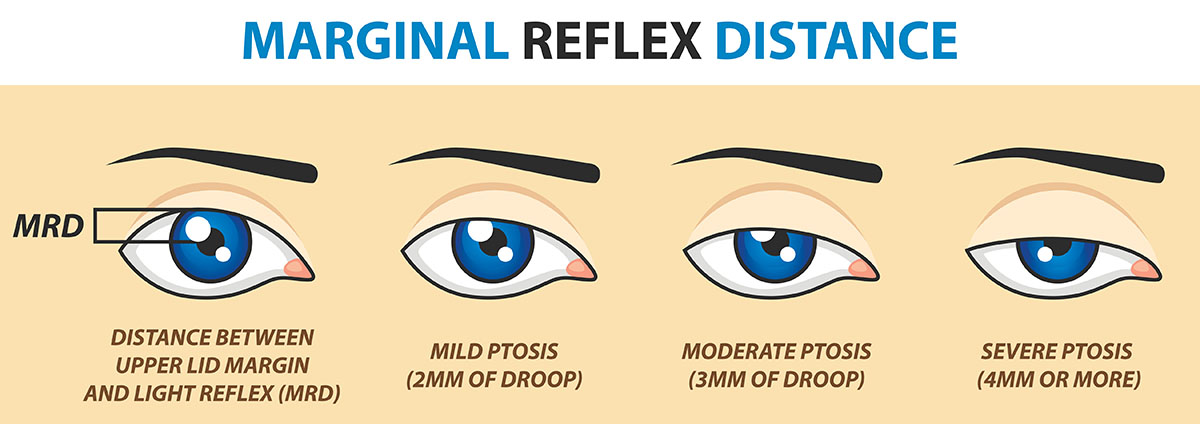
Diagnosing ptosis involves a combination of clinical assessments and, in some cases, additional tests to determine the underlying cause. The choice of tests depends on the severity of the drooping, how it developed, and whether other symptoms are present.
These tests help confirm the diagnosis of ptosis and identify whether it is related to a broader medical condition.
Determining the severity of ptosis is an important part of the evaluation. It helps guide treatment decisions and track whether the condition is stable, progressive, or affecting vision.
These measurements help classify ptosis as mild, moderate, or severe and determine whether intervention is necessary. Based on this assessment, the doctor will also decide if ptosis correction surgery is appropriate or if monitoring is sufficient for now.


Yes, a comprehensive eye exam can detect ptosis. It includes eyelid measurements and checks for any effect on your visual field and eye function.
Imaging such as MRI or CT scans is only needed if there’s concern about nerve damage, tumours, or sudden-onset ptosis with other neurological symptoms.
You should consult a plastic surgeon, oculoplastic surgeon, or ophthalmologist with experience in eyelid conditions. These specialists are trained to assess both the functional and aesthetic aspects of ptosis and recommend the most suitable treatment.
A typical ptosis consultation takes about 30 to 45 minutes, depending on the complexity of your symptoms and the need for further testing.
It can be. Sudden or worsening ptosis may signal an underlying nerve or neuromuscular condition and should be assessed.
Preparing for your consultation helps ensure that your doctor has the information needed to assess your condition accurately. Here’s how you can get ready:
Being well-prepared helps your doctor carry out a more thorough and personalised evaluation.
Not all drooping eyelids are caused by ptosis. Several other conditions can mimic its appearance, but they involve different causes and require different treatments.
These differences can be subtle, and a proper diagnosis often requires clinical evaluation. An experienced specialist is best equipped to identify the condition accurately and recommend the most suitable treatment plan.
While many cases of ptosis are mild and age-related, some situations may suggest a more serious underlying issue. It’s important to know when further evaluation is necessary.
Red flags to watch for include:
If you notice any of these signs, seek medical attention promptly. The doctor will perform the necessary tests to rule out more serious conditions and ensure timely management.
Diagnosing ptosis involves more than identifying a drooping eyelid; it requires a careful assessment of eyelid position, muscle function, the effect on your visual field, and potential underlying causes. From clinical measurements and visual field testing to specialised neurological checks, each step helps determine whether the condition is mild, progressive, or linked to something more serious.
If you are experiencing eyelid drooping or have concerns about changes in your vision or appearance, schedule a consultation with Allure Plastic Surgery to explore your options for further evaluation and personalised care.
Dr Samuel Ho is a consultant plastic surgeon and Medical Director of Allure Plastic Surgery, a boutique day surgery centre at Wisma Atria specialising in mummy makeovers, tummy tucks, eyelid surgery, rhinoplasty and breast surgery. With more than 17 publications in leading international journals and contributions to major plastic surgery textbooks, he combines academic rigour with clinical expertise. Having trained with leading surgeons in South Korea under recognised fellowships, Dr Ho is committed to providing safe and natural results through advanced surgical care.


Mon-Thu : 10am - 6pm
Fri : 10am - 8pm
Sat : 10am - 3pm
Sun & PH : Closed
Copyright © Allure Plastic Surgery (A subsidiary of Beyond Medical Group) | Terms & Conditions